Wednesday, August 31, 2011

Special Needs Birds (Guest Post)

So what's a special needs bird, anyway?
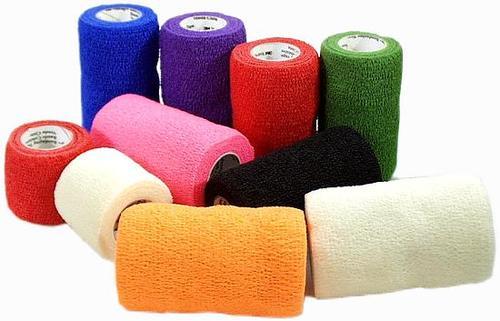

Vet Wrap is great, because when it gets dirty, it is easy to replace.


It’s a term that means a bird with some sort of impairment that requires accommodation from its human caregivers and its environment. There are many types of “special needs birds”, and all have different needs. Some are hatched that way, others get into accidents or suffer from ailments, but all are fantastic companions!

While some accommodation is necessary, these birds live happy, healthy productive lives. Here are some of the types of special needs birds we have cared for at Squawk and Howl (in rescue, cage remodeling services, and in pet sitting)

1. birds with feet or legs missing/paralyzed.
Birds of this type need accommodations such as ladders to climb and perch upon (hang them horizontally as a type of wide perch), platforms to rest upon, and huts and hammocks to sleep in. These birds tend to prefer rope perches to harder wood ones. “Vet wrap” is always a great gripper to wrap around cage furnishings and perching areas for these birds.

2. birds with no or only partial beaks.
In addition to having some mobility issues (birds use their beaks as a third foot to climb, for example), these birds may have some eating issues, too. They cannot mascerate their food the way a beaked hookbill can, so small, pulverized, and/or mushy foods are key to helping these birds. To make foods that are made especially for beakless birds, you can use a food processor and add moisture to pellets, seed and sprout mixes and veggies to make a thick paste or slurry, depending on your bird’s preference. Momma Bird's Birdie Bread can be mushed up with vegetable or chicken broth into a slurry or paste, and still tastes just as great!
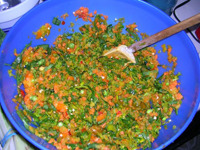
Here is a blend of highly chopped mash-
all organic fresh veggies, using a food processor.
3. deaf birds.
Birds that cannot hear or see can be easily startled, and for a prey animal, that’s scary business. They need a slow, calm person to live with, as sudden movements seem to startle them more. Deaf birds can easily be accommodated with a visual signal that you will be entering the room, much like a doorbell or phone “ringer” in a deaf person’s home.

4. birds that have emotional issues from serious neglect or abuse.
Oftentimes, the invisible “disabilities” are the hardest to accommodate. They look “normal” but many birds that were rescued from bad situations (not just simple re-homed birds dealing with grief, but actual rescues that are survivors) have “baggage” that you need to compassionately discover and learn how to work around. These birds have legitimate fears (that sometimes translate into aggression or phobic behaviors) that need to be respected. And in my case, I personally had a bird Angus who was in “solitary confinement” with NO social interaction for 21 years before he came to live with me. My advice? Go slow, on the bird’s time-line--not yours. Celebrate the victories, no matter how small. And learn what these birds will teach you.

5. blind birds.
Just like with humans, blind birds need accommodations that don’t change very often. A basic cage layout, food & water always in the same place, etc. Toys can be rotated, but they should stay in the same areas that toys go in that cage. And toys that spin or move don’t work for this group. A minimal cage layout is best for blind birds, and yes! they can be housed with others. Often the birds will cooperate & help one another. Foot toys and shreddables work just great for birds who are blind.

6. pluckers and self-mutilators
Pluckers and self-mutilators do it for so many reasons, and medical testing is necessary to eliminate physical causes before assuming that the issue is behavioral. I will post further about plucking for more info on that. And just because a bird plucks or mutilates does not mean that they are unhappy, in a bad home, or being abused or neglected. Some of the most caring and wonderful bird parents out there have pluckers and mutilators. That said, living with a plucker is much easier than living with a self-mutilator (a bird who inflicts wounds to their flesh). Mutilators are often hospitalized, collared, and given lupron injections to deal with the problem. It can be costly and is certainly a commitment.

As always, be sure to check out Momma Bird's Cafe and Toy Shoppe for the very best toys that aim at redirecting a lot of this unwanted behavior, like shreddable and foraging toys!


Now through Sept 2nd, enter code specialneeds to get free shipping on orders over $100!

Saturday, August 27, 2011

Aaah, Summer Hormones! (Guest post)

Got a question a while back from a hen owner whose bird is shrieking for her ALL THE TIME and presenting her vent to her as well. She pleaded for help. Here is my answer (which applies to both chronic egg layers, regurgitators, compulsive masturbators, overly-bonded-to-one-person-birds, and possibly hormonal pluckers. It applies to both hens and cocks.):

Parrot-type birds only wanna have babies and have sex when the conditions are right. Sadly, in our attempt to be good bird parents, we sometimes provide these conditions without even knowing it!

Here are the ideal conditions for having a clutch:

Shrieking parrots? Could be hormones!
SPRING AND SUMMER. Extended daylight hours send the signal that it is mating season.
Solution- a sleeping cage in a quiet room away from family hubbub, where s/he can get 12 hours of dark & quiet.

ABUNDANCE OF FOOD. When we overload the dish with lots of food, we are sending the signal that there is not only enough for her, but enough for babies.
Solution- a sprinkling of food, not a bowl full. And if they eat it all, refill with (again) just another sprinkling. Don’t starve them, but don’t give them so much that they are playing with their food, either!

RICHNESS OF FOOD. What is your bird’s main diet? If you said “seeds”, you should work on converting her/him to a pellet based diet supplemented by greens veggies and fruits. They are lower in fat. Cut out rich fatty foods like seed, nuts, treats, & such when she gets crazed like this. When a hen 'tiel I know starts acting this way, she gets enough pellets to last her a couple hours (a mere sprinkling) and greens only. No seed, no other fun foods. (Boy, does she give her bird parent the evil eye--but no eggs!)


Too much couple time and not enough larger flock
time can lead to hormonal rages.
PRESENCE OF A “MATE” (real or imagined). If you are her perceived mate, you should shun her when she acts randy, and only touch her head, neck, beak (not the skin attaching her beak to her face, though), and her feet. Full body stroking (cockatoo owners, are you listening?!), touching of wings, back, tail, etc are sexual to a bird. Do not send her that message.


PRESENCE OF A “NEST SITE” (real or imagined). Remove any huts, tents, boxes, cubbies, etc. Rearrange her cage & play areas so that they are sparse and have no dark areas.

SAFETY (familiar surroundings she knows are safe) TO RAISE A CLUTCH. Move the location of her cage to another side of the room, add a new strange toy in there or rearrange the cage so it is unfamiliar. Move her food cups from where they usually are.

MATE TIME VS. FLOCK TIME. Make sure that lots of the time she is out of her cage is “flock time” not one-on-one “mate time”, if possible. Is she your only bird? If so, then “flock time” is as many humans in the house as possible + her. “Mate time” is time she spends alone one-on-one with you. Make more of her time (when possible) flock time and when she must have mate time, do not encourage her advances at all. Ignore screaming, masturbation, seduction attempts, regurgitation. Do not allow her to seek out dark spaces at any time. Start eating meals as a flock, and have her shower (in the shower) with various members of your household (not just you).

Excessive stroking and hiding inside or under
things is a big no no.
DRY SEASON. Birds have more of a sex drive in the hot long days of the dry season, not winter (the wet season). Take away the illusion of ideal conditions by showering (and I mean drenching the bird!) frequently.

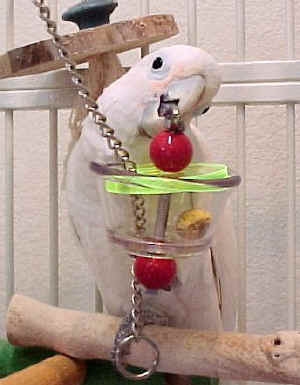
Creating conditions opposite to ideal for creating a clutch is the way to cool off those raging hormones! Redirect those instinctual behaviors! Giving your bird a behavioral "out" to take their instincts to is an excellent but not often talked-of strategy. Foraging toys and shreddables are the best tools for this trick. There are some great choices at Momma Bird's Toy Shoppe and Cafe!

The author is the founder of Squawk and Howl, and has worked with parrots as a behaviorist, sitter, and rescuer.

Coupon Code:  cooldown for free shipping when you buy $50 or more!

Saturday, August 20, 2011

All About Pellets (Guest Post)

Extruded pellets

In the US, most folks are becoming aware that bird nutrition is more than a sunflower-laden seed mix. Pet food manufacturers (including some who are avian vets) have stepped in and created pelleted/formulated diets to fill the gap. This is happening mainly in the US, but other countries (Germany and Hagen, Sweden and EcoBird) have their own brands as well.

But what exactly are pellets, and are they right for your bird? I hope to answer some basic questions on what they are, how to determine if you should incorporate them into your bird’s diet, and how to pick a good one of you do.


What are pellets?


Red Sided Eclectus like these need a special diet- and that
includes a special pellet, if you choose to use them.
Pellets are either compressed (looks like a rabbit or guinea pig pellet) or extruded (like Zupreem or Harrison’s) ingredient blends that are supposedly formulated for optimum nutrition for your bird. They vary widely in their quality. Not all pellets are created equal.

Some species should most likely NOT be served pellets, and just have higher maintenance diets that humans must cater to if they want to keep that species. Species such as:

Eclectus. For information on what to feed an Ekkie, visit Land of Vos.

Toucans, Aricaris, and Toucanets need a low iron diet that many pellet manufacturers do not meet well. Even many low iron formulas specifically marketed to be fed to these birds are too high. Be sure and check with your avian vet before choosing a pellet diet for them.

Lories and Lorikeets need a nectar based diet and pellets would be a small supplement to their diet, not a mainstay.

Corn, wheat, and soy should be in your parrot's diet in limited amounts- if at all. And only human grade, non-GMO versions!
Other individuals in other species there are plenty of other individual birds within species that I did not mention that should not eat pellets, or only eat specific kinds. Many birds have shown to be sensitive or allergic to artificial colors, synthetic vitamins, toxic preservatives used in many common brands, and ingredients that may or may not be GMO, or non-human grade (corn, soy, and wheat being the most common culprits).

At my flock's house, I do feed pellets to every one of my birds (along with a fresh diet), even the small Aussie birds that most people feed a seed-based diet to. And I have to brag that my birds are healthy, happy, are not obese and are quite athletic. Their feathers are glowing and their skin is not overly dry. My vet is always pleased when we come in for annuals. I am highly selective about what I feed my birds.


How to incorporate pellets into your bird’s diet

Pellets and other dried foods (which resist bacteria growth) are great as bird cage foods and food for playgym cups, and that’s how I use them at home. My birds eat the bulk of their food at “flock meals” twice a day, and that’s when they get fresh or cooked foods that make up the bulk of their diet.

When introducing any new food, try one new element at a time, not a bunch of new things. Wean slowly but deliberately- I offer pellets and other dried foods all day in cages & on gyms for when birds want a nibble.

Guest post by Danielle Eurynome, founder of Squawk and Howl. She is a parrot behaviorist, consultant, rescuer, and sitter.

Stay tuned for a new brand of pellets- Momma is looking to create an organic, soy-free, pellet without all those cheap fillers!

Coupon Code: humangrade for 20% off any foraging toy in the store! Now through August 27th!

Wednesday, July 20, 2011

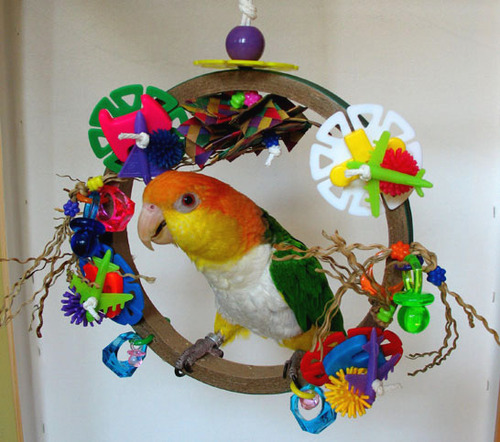
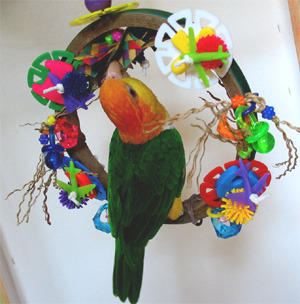
Parrot Toys: More than "just a toy"

This guest post is by the owner of Squawk and Howl, a parrot centric pet sitting and parrot behavioral consulting business. for more info check out their website.

In my work with people and their parrots, I often recommend toys. I have heard common refrains from people with parrot behavioral issues: “Oh I gave him some toys once, but he wasn’t interested, so I stopped buying them.”

This is not the right attitude. Toys are NOT optional in the life of a captive parrot. Why? Parrots are wild creatures with all their instincts intact. Toys exist for them to harness those wild instincts and make the bird more suitable for life in a human home. quite simply, if a parrot does not have these outlets, behavioral issues likely ensue.

To that end, I have identified six specific instincts that need channeling for many birds, and the toys that help with that behavior:

The Six Kinds of Parrot Toys
(many fall into more than one category!)

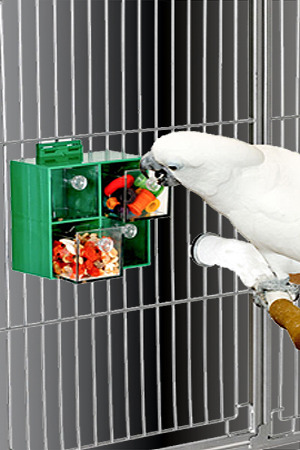
Foraging Toys

Wild Behavior this replaces:
Parrots spend 6-8 hours a day hunting for food. It satisfies their mind & body. Studies show that most animals, including parrots, would rather work for a food- even if that same food is readily available to them without work. It gives them a sense of purpose and accomplishment. You are doing your bird no favors by serving it food in a dish and not giving it a job to do.


________________________________________________________________________

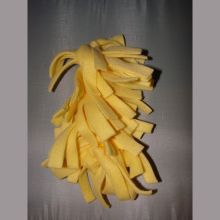
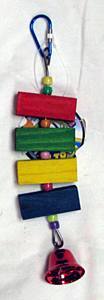
Destructable/Shreddable Toys
Wild Behavior this replaces:
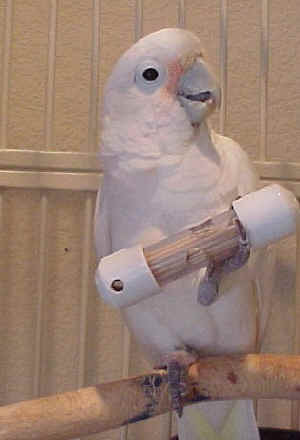
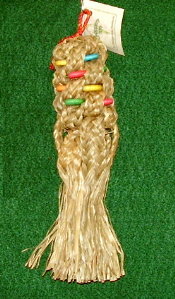
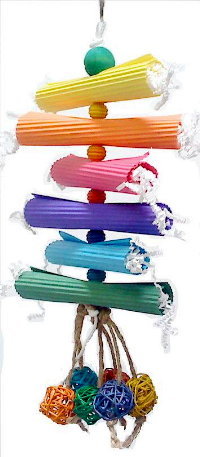
Parrots are nature’s composters: they take a bite of food & let it fall to the forest floor. They chew wood & other materials to trim beaks, make nesting cavities, & sleeping burrows & generally make a huge mess. It is in their nature. If you haven’t enticed your bird to use one of these toys, perhaps you should try different shapes and textures.


________________________________________________________________________

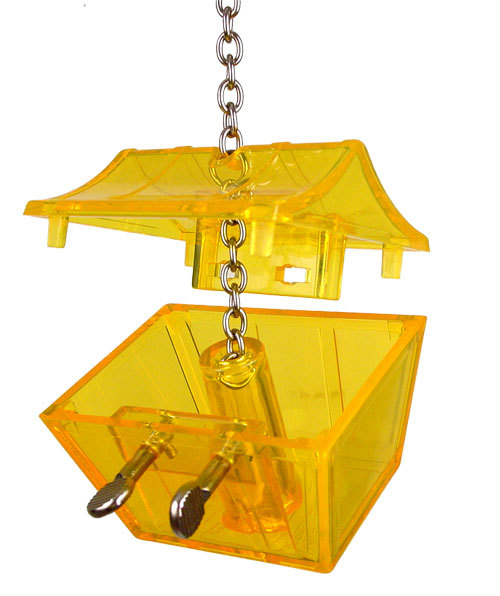
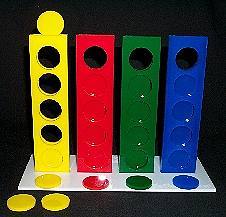
Puzzle/Manipulative Toys
Wild Behavior this replaces:
Parrots are highly intelligent creatures that, like humans, get smarter the more you challenge them. Teach your parrot cause and effect, how to control its own environment and other like-minded principles that these toys teach and your parrot will have healthy self-esteem and understand the world better.


________________________________________________________________________

Preening Toys

Wild Behavior this replaces:
Birds preen one another’s heads (allopreening) for grooming AND bonding purposes, and preening themselves and flock members can be very soothing. Preening toys are like pacifers for stressed birds, feather pluckers, lone birds in a cage, and specific breeds (like cockatiels) in particular.


________________________________________________________________________

Acrobatic/ Athletic Toys
Wild Behavior this replaces:
Encouraging climbing, flapping, swinging and other athletic ventures replaces natural exercise the bird would have in the wild. Sitting in a cage all day while we are at work is just unnatural!


________________________________________________________________________

Creative Toys
Wild Behavior this replaces:
Again, parrots in the wild use tools, create things, and make lots of noise. This is a “blowing off steam” kind of toy, as well as teaching cause & effect. Noisemaking, nest weaving (in Quakers), painting, and other activities fall in this category.


Be sure and teach your parrot how to play with these new toys- toys are a displacement tool, and they do not inherently know how to play with them.

Be sure and check out Momma Bird's toy selection! Get 20% off any toys (and as many toys as you want!) when you purchase at least one bag of birdie bread (between now and August 31st). Just enter code toysaremandatory when checking out in the coupon code box.

Tuesday, July 19, 2011

Medicating Your Bird

NEVER buy over-the-counter medicines to treat your bird. Please establish a relationship with a Board Certified Avian Vet (BCAV) and take your bird to them when s/he is sick. Read more about that here.

Once you have real medicine that has been prescribed by your vet and a sick birdie to orally administer them to, the task can seem overwhelming. Read this great article on medicating birds for good technique.

Tuesday, July 12, 2011

How to find a Good Avian Vet

The term "avian vet" can be misleading. Any vet can use that term, regardless of their education, certification, or experience. All that is required is a willingness to treat birds! Therefore, it is best to find a "Board Certified Avian Vet"- one who has worked on birds a minimum of 6 years and has taken a rigorous exam (and passed).

How to find a Board Certified Avian Vet vet near you: ABVP.com (Search the "Find a Diplomate" database and pick "avian" as the specialty.)

You need to plan for emergencies, which means buy a Gram Scale! Assemble a First Aid Kit! Keep it stocked!

While we in the Bay Area are lucky to have several wonderful Board Certified Avian (BCA) Vets nearby, if you found this page and do not live here, the nearest avian vet may be hours away from you. This is due to the fact that there are only a couple hundred avian vets in the whole WORLD. If this is the case, you should do a bit of research and find a second if not third vet within a proper travel distance. Find the nearest BCA vet in case you birds life is in danger and you need someone that KNOWS what to do about it and fast. Then, find the nearest non-certified avian vet that specializes in birds. If that vet is quite a distance away local your nearest vet that accepts birds. Some vets only take dogs/cats, cows, horse, ect ect... You need contact them and speak with them to find out.
Given that avian medicine and nutrition are a new science that is advancing all the time, you may find that there is no Board Certified Avian Vet near you. In that case, ASK LOTS OF QUESTIONS of any prospective vet. Many of these avian vets are wonderful- and are indeed studying toward the Avian Medicine Exam. (It does take 6 years of practice before they can take this test, remember.) The first question on your list should be, "How many birds do you see in your practice DAILY?" The answer that is best for your bird will be at least "four". Any less and they most likely do not have enough experience. Then ask what sorts of birds they have treated, and what sorts of conditions. Here are links to find vets treating birds:

toolady.com
babybirds.com
AAV.org
parrotmag.com

Also research emergency care. What happens if your bird gets stepped on at 9 PM at night? If it can't stand or is bleeding out its mouth. A broken wing or leg. An accident in the kitchen. What do you do? Who do you call? You should already know. Not knowing is irresponsible neglect of any pet. Researching vets does not cost you a penny but can save you a bundle of money and grief in the future.


Other Emergency Medical Contacts:
ASPCA National Animal Poison Control Center (USA) 24-hour emergency phone number: 1-888-426-4435
(Vets are available to help 24-hours a day, but you are charged a fee for the call)

Tuesday, July 5, 2011

Poopology

All birds do it, so lets talk about it. Poop! Here's the basics of caring for your bird(s) and keeping an eye on their health -- because a healthy parrot is a happy parrot!

Clean wax paper or other smooth surfaces can be used to collect droppings to evaluate or take to the vet.

Bird poop has three parts. All three should be examined on a regular basis. A sick bird may show a change in the volume, color, consistency, or frequency of droppings.

As birds are prey animals who hide their illnesses, droppings are one of the best and first ways to evaluate illness.

It is for these reasons that you should not use substrate on your cage dropping pan.

Here are notes about the three parts:

1. Feces: solid waste which should be coiled neatly on itself. The normal appearance is usually soft and brown when on a formulated diet (pellets) but may be abnormally dry and black or green with a seed diet. Color may also be affected by colorful foods, such as carrots or beets (orange/red/pink tint) or greens (greenish tint). If the feces are not the right color, and the bird has not consumed dyed toys, items or high pigment foods, a vet should be seen immediately. Neon green feces are a sign of illness, but other greens are not.

2. Urates: creamy white semi-solids which surround part of the coil, which are waste from the kidneys. If the urates are not white, and the bird has not consumed dyed toys/safe items or high pigment foods, a vet should be seen immediately.

3. Urine: which is supposed to be clear. The normally clear urine may be increased in amount when excess consumption of fruit or vegetables. Again, any discoloring in urine, when the bird has not consumed dyed toys/safe items or high pigment foods, means a vet should be seen immediately.

Note: Many birds have a larger poop than normal first thing in the morning, if they are laying eggs, or are babies on formula or crop milk.

Momma Bird's Birdie Bread is made of natural and holistic ingredients, with no artificial colors or dyes. Our Happy Bird Day Loaf does come out red, but that is from all the strawberries and sweet potatoes in the mix! So please remember to keep an eye on your birdie friend's droppings and talk to your vet if anything comes up.

In the meantime, give your parrot some birdie bread and hear those happy noises!